
PFAS. An acronym that has recently become a staple of public debate, the media, and everyday conversations. Yet these substances are nothing new: they have been present in our daily lives since the 1950s, largely without our awareness.
For several years now, these persistent and mobile synthetic chemicals have been the subject of growing scientific and media attention. Despite this, and although research on the subject has advanced, much remains to be understood about the full extent of this pollution and its effects.
A growing number of studies and reports have documented how widespread PFAS contamination is in the environment (in soils, air…), in countless everyday objects (toys, cookware, technical clothing…), and even in our own bodies (breast milk, blood).
With regard to aquatic environments in particular, most studies have focused on drinking and freshwater water.
But what about the waters where we swim, dive, surf, and paddle?
To date, no large-scale study had addressed this question in Europe.
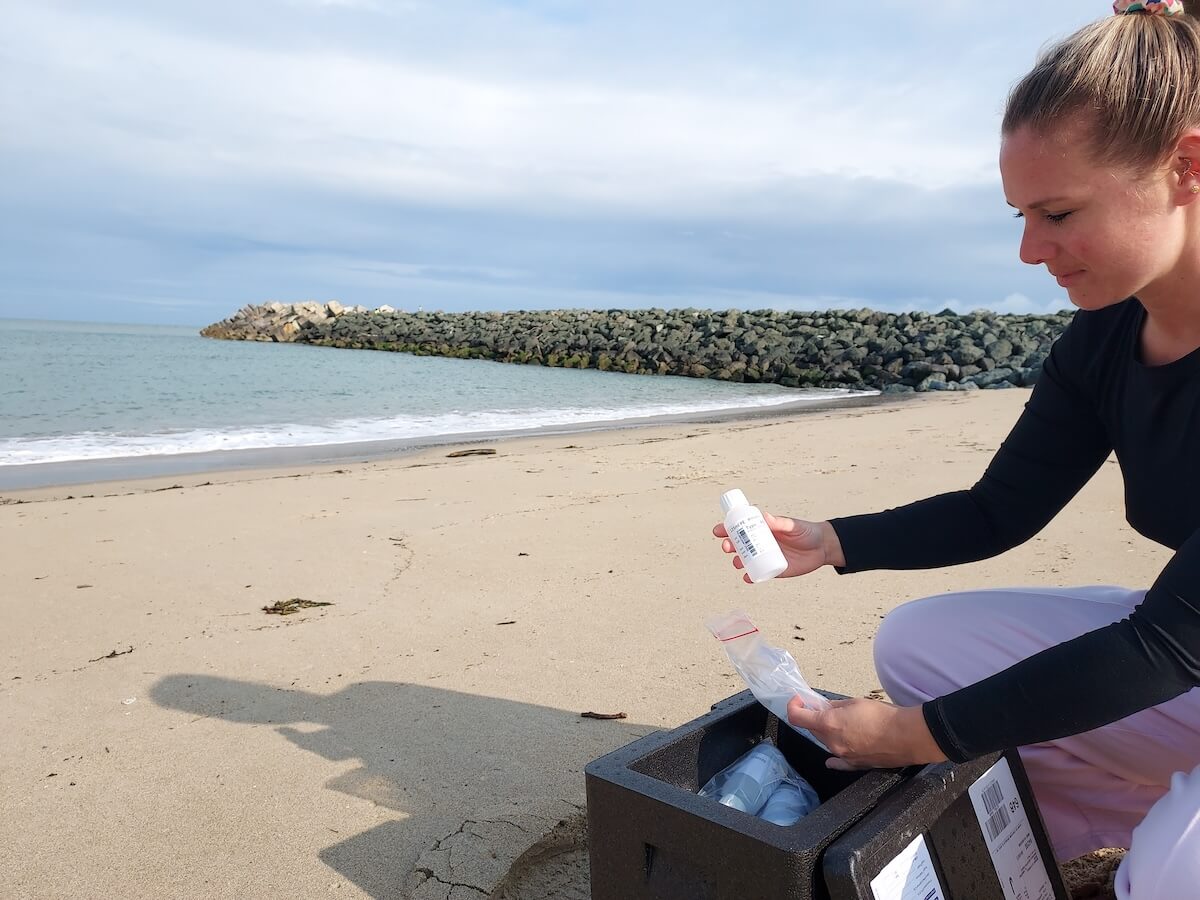
That is why Surfrider Foundation Europe, with the support of Eurofins laboratory, launched a first-of-its-kind study across French territory, with a clear objective: to document the presence of PFAS in coastal and freshwaters, and to contribute to a better understanding of this pollution in aquatic environments frequented by the general public.
PFAS: what are we talking about?
Behind the acronym PFAS lies a vast and complex world of chemistry. It refers to per- and polyfluoroalkyl substances, a family of nearly 10,000 distinct synthetic chemical compounds (according to the OECD), considered among the most concerning emerging contaminants identified to date.
These substances have been in use since the 1950s. Their industrial success rests on a set of specific properties: resistance to heat, water, grease, and staining. They are found in firefighting foams, non-stick coatings (such as the well-known Teflon), cosmetics (to improve product hold and water resistance), waterproof technical clothing, and many other everyday products.
PFAS are built around an extremely stable carbon-fluorine bond.
The consequence: once released into the environment, these substances break down very slowly. Many PFAS thus persist for decades in soils, water, and living organisms. This is why they are commonly known as “forever chemicals.”
Two of them are particularly emblematic: PFOS and PFOA. Widely recognised for their toxicity and their ability to accumulate in living organisms at every level of the food chain, they were subject to international bans as early as 2009 and 2020 respectively. Yet they continue to be regularly detected in the environment.
When certain PFAS partially break down, they give rise to trifluoroacetic acid (TFA), a particularly stable and mobile transformation product. Highly persistent, TFA is gradually accumulating across aquatic environments and is now detected in water bodies around the world.
Concerning effects on human health
The weight of scientific evidence paints a serious picture. Exposure to certain PFAS has been associated with documented harmful effects on human health.
Studies have identified disruption to the reproductive system and foetal development, endocrine system dysfunction (with certain PFAS acting as hormonal disruptors), and a weakening of the immune system.
Links to certain cancers have also been established. In 2023, the International Agency for Research on Cancer classified PFOA as a confirmed human carcinogen, and PFOS as a possible carcinogen — a scientific recognition that underscores the urgency of action.
An impact that extends across entire ecosystems
PFAS do not only threaten human health. Wildlife is also affected, with documented cases of hormonal disruption and immune dysfunction observed across numerous species.
Reproductive and developmental abnormalities have been recorded in fish and amphibians exposed to these substances. Birds and marine mammals are not spared: hormonal disruption and declines in fertility have been observed in several species.
As PFAS accumulate throughout the food chain, their impact increases as they move up each trophic level. From plankton to apex predators, the full breadth of aquatic biodiversity is potentially exposed.
Why Surfrider conducted this study
Like most pollutants, PFAS eventually find their way into the ocean.
We often hear that PFAS are “everywhere.”
But what does that mean in practice for bathing and recreational waters — for surf spots, beaches, lakes, and rivers where thousands of people gather every summer? That question had never been asked systematically and at a larger scale.
To address this gap, Surfrider Foundation Europe took the initiative to conduct this study, driven by a core conviction: the health of the ocean and of the people who enjoy it can no longer remain a blind spot in the fight against PFAS pollution.
A remarkable volunteer mobilisation
107 sites. 58 PFAS analysed. Over 6,200 data.
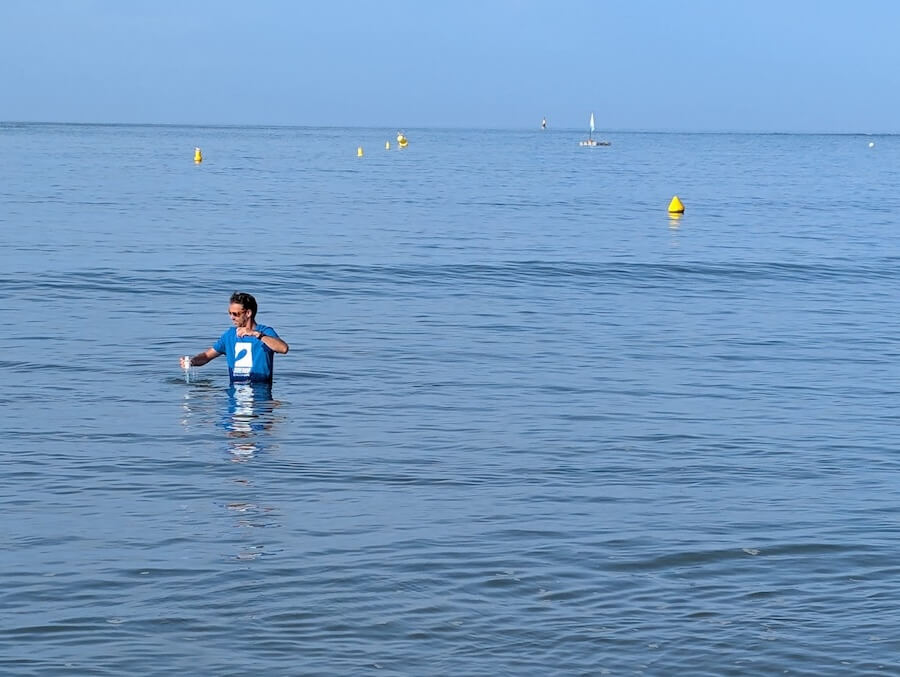
The scale of the study is first and foremost a testament to the extraordinary mobilisation of Surfrider Foundation Europe’s volunteer network, which turned this citizen science project into a genuine success.
Between June and July 2025, samples were collected at 80 coastal beaches and 27 freshwater sites (lakes and rivers), spread across France, including both mainland and overseas territories.
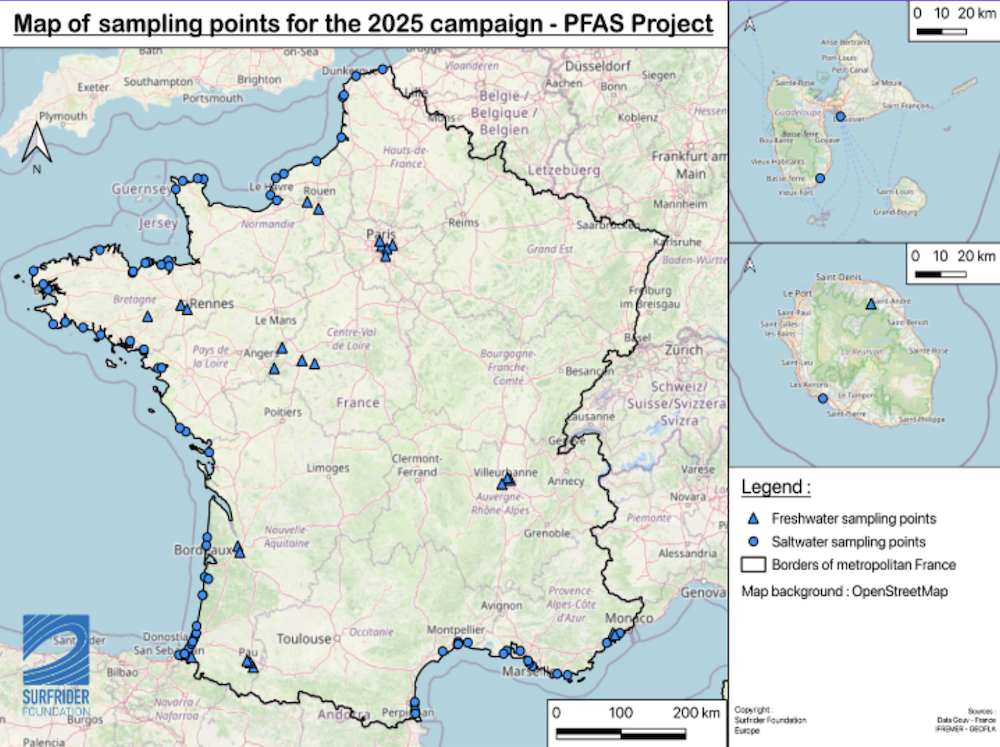
Sites were selected using a set of cross-referenced criteria: existing data on PFAS in surface waters compiled by the European Forever Pollution Project the presence of a local Surfrider chapter nearby, and confirmed recreational use (bathing or water sports) at the relevant location (sites officially designated as such by the French Ministry of Health, supplemented by sites where recreational activities were identified and reported by our volunteers despite not being officially designated as a bathing site).
Volunteers received a training in advance in sampling techniques, following a standardised protocol developed with Eurofins laboratory. Analyses were carried out by the laboratory in accordance with current scientific standards, before being interpreted by Surfrider’s teams.
Once again, the volunteer network demonstrated its strength and determination. It is one of Surfrider’s greatest assets — and this campaign is a striking example of that.
What the study found
Threshold exceedances that raise serious concerns about the chemical status of our waters
The Water Framework Directive (WFD) is the primary European regulatory framework for the monitoring and management of water bodies. At the time of the study, PFOS was the only substance in the PFAS family listed as an indicator of the chemical status of surface waters.*
The results are unequivocal. PFOS was detected in the vast majority of samples: 62% of sites showed the presence of this pollutant, despite its near-total ban. It remains the third most frequently detected PFAS, after TFA and PFOA.
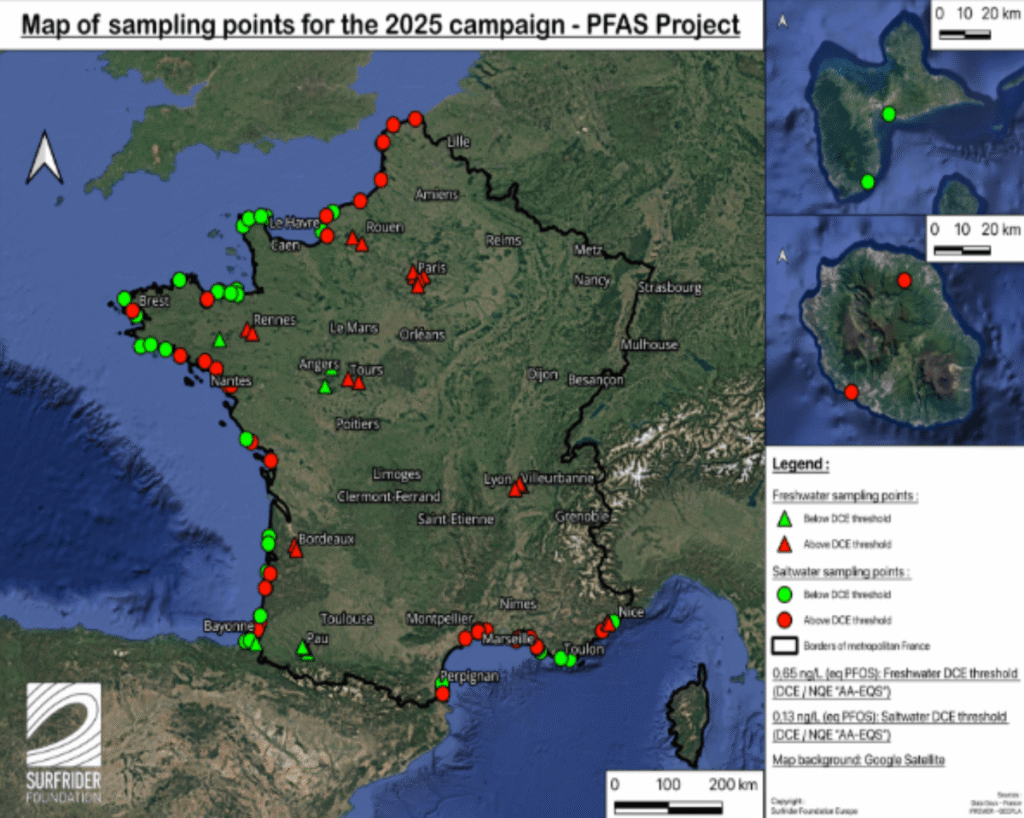
Even more concerning: our study found that the maximum permitted value for PFOS was exceeded at 78% of freshwater sites and at 44% of coastal sites. This means that the majority of waters analysed would be classified as being in “poor chemical status” under the European criteria in force at the time the study was conducted.
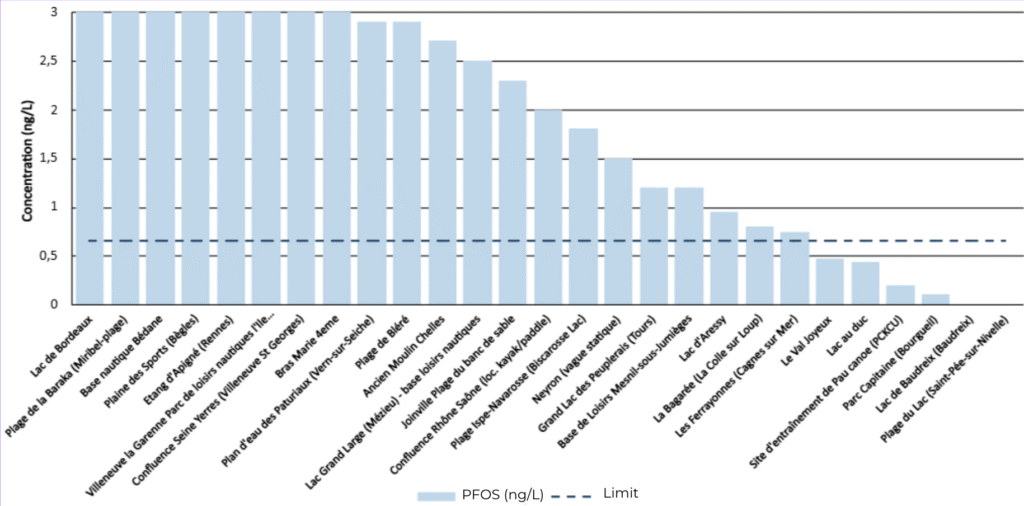
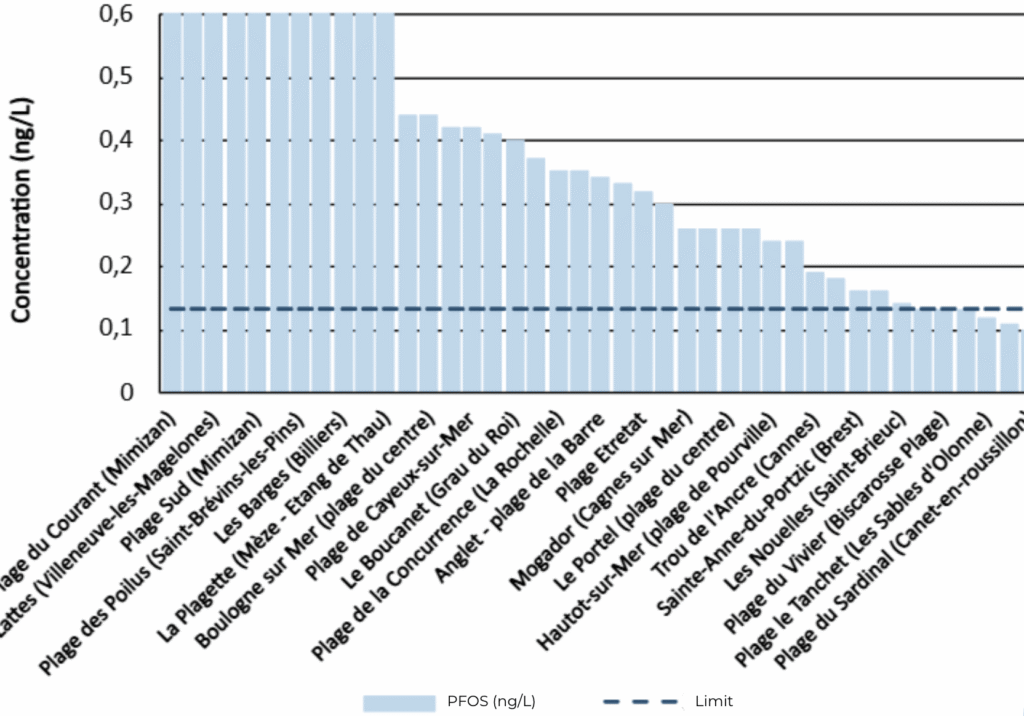
These results make one thing clear: banning a substance will not magically make it disappear. PFOS and PFOA have been prohibited for years, yet they remain among the most frequently detected PFAS, at significant concentrations. Contamination builds up over time, and institutional inaction makes it worse with every passing year.
*An update to the list of priority substances for surface and groundwaters has since been adopted and entered into force on 11 May 2026. It now extends the list of substances to be monitored to a sum of 25 PFAS for surface waters.
A troubling diversity of PFAS — and the case of TFA
PFAS do not form a homogeneous group. Estimates place their number anywhere between 4,000 and 14,000, which makes environmental monitoring extremely complex.
One of the reasons lies in the phenomenon of “regrettable substitution” — the practice by which industry has repeatedly replaced banned PFAS with alternatives from the same family that are not regulated, but likely to pose the same risks to health and the environment. Far from solving the problem, these substitutes can perpetuate the cycle of exposure to harmful chemical substances.
In this study, 58 different molecules were targeted and quantified using standardised analytical methods. The results: up to 19 distinct PFAS were identified at a single site, and a total of 23 substances were quantified across all samples.
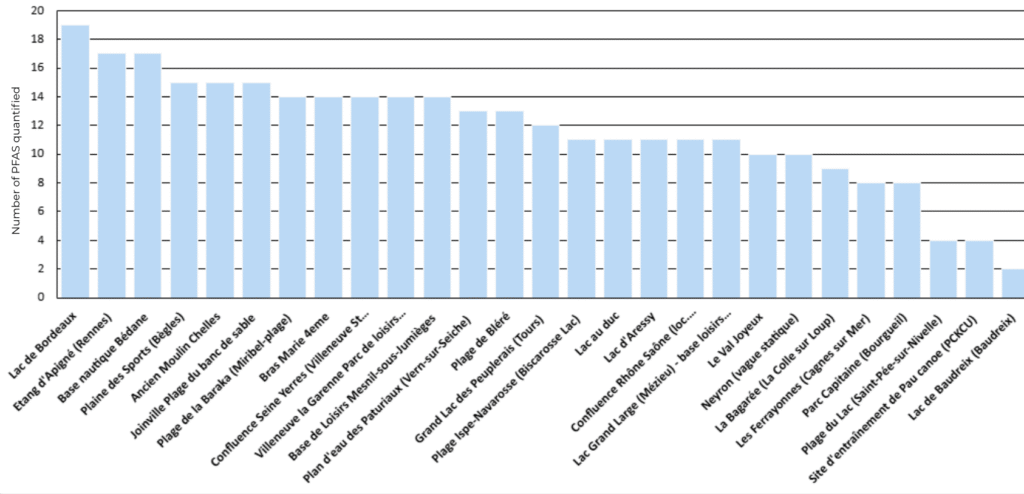
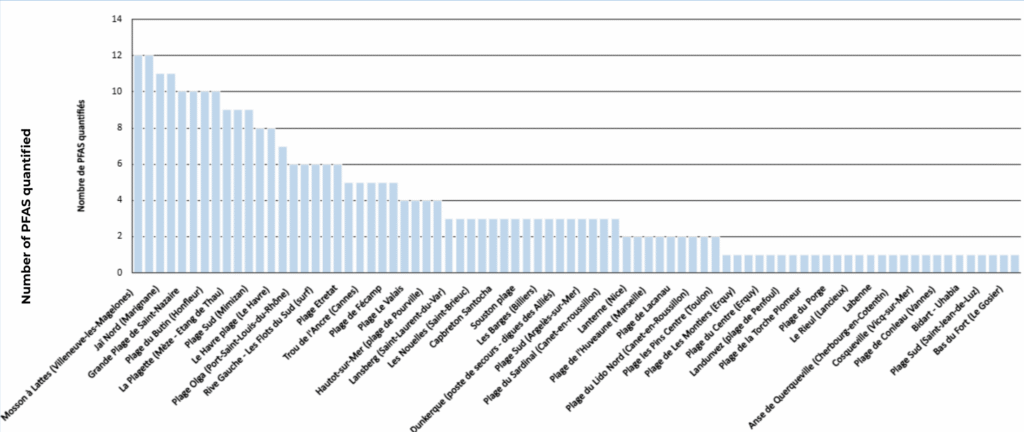
One compound stands out in particular: TFA (trifluoroacetic acid), detected in 100% of samples at concentrations far higher than those of other PFAS. Its ubiquity is all the more concerning given that the European Chemicals Agency (ECHA) has recently classified it as toxic to reproduction (Category 1B).
These findings highlight a fundamental limitation of the current regulatory framework: a substance-by-substance approach to legislation cannot keep pace with the reality of a multifaceted and constantly evolving contamination.
PFAS in bathing waters: a widespread presence
In the Netherlands, PFAS contamination has led authorities to restrict swimming at certain sites and to develop a management framework based on indicative guideline values, established by the National Institute for Public Health and the Environment (RIVM). In the absence of European regulation on the matter, our study drew on these Dutch values to supplement the analysis.
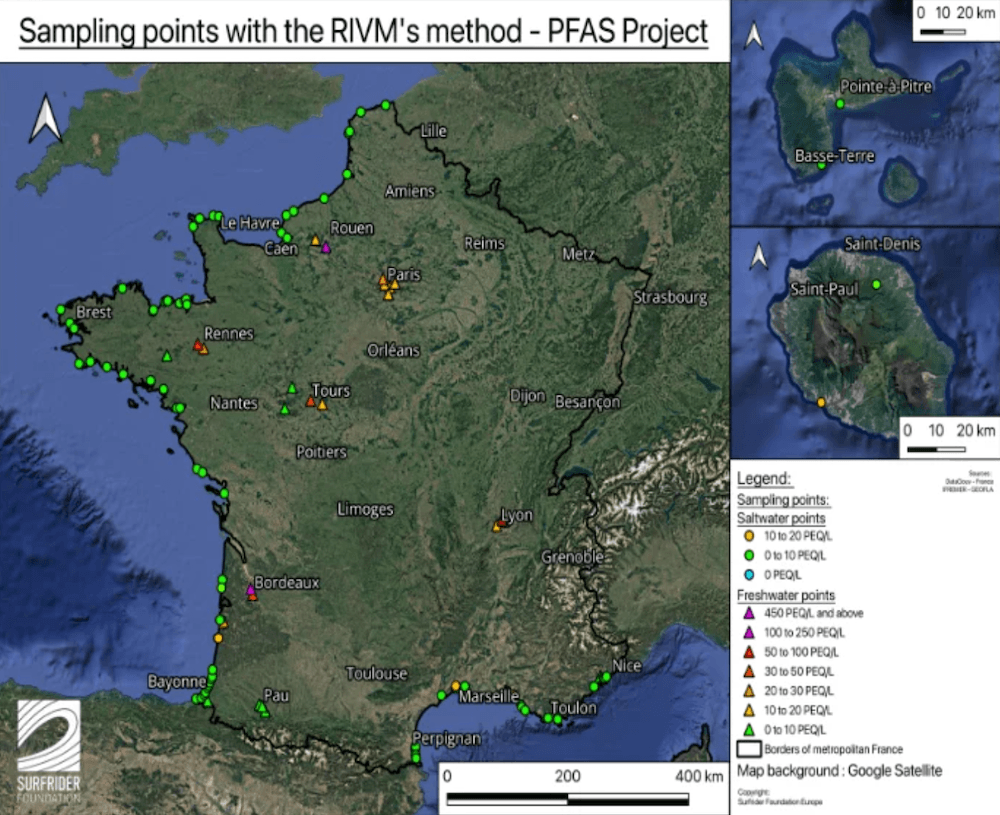
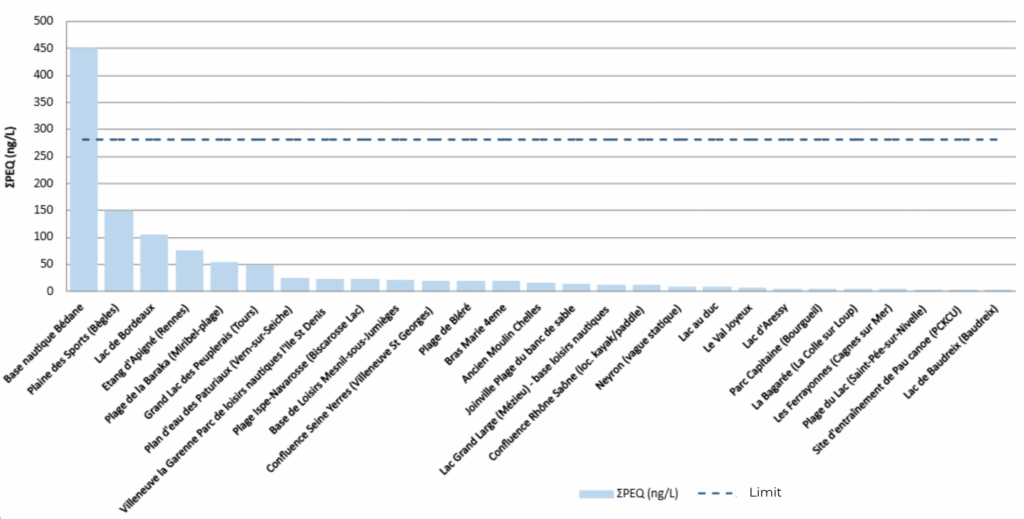
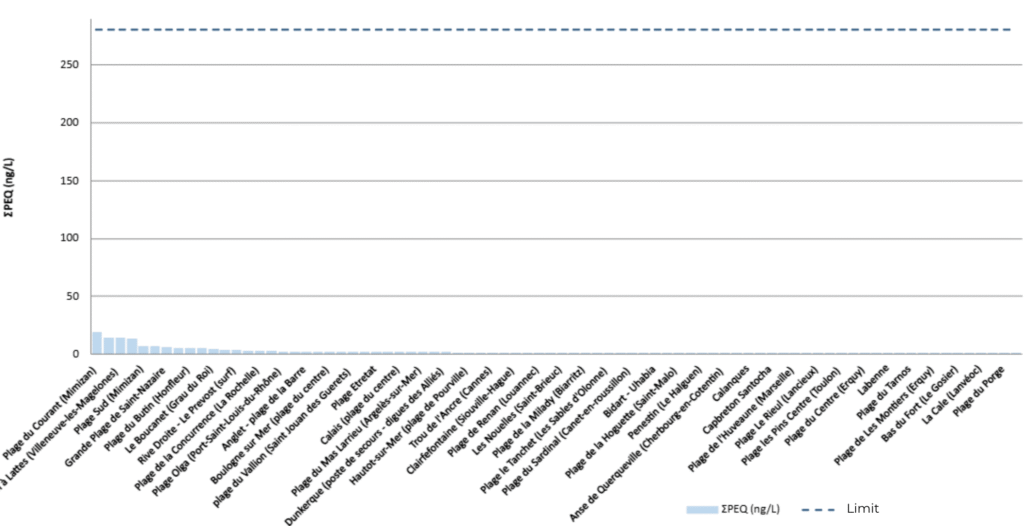
Conclusion: every bathing and recreational area tested showed detectable PFAS concentrations. And across all samples, one lake site significantly exceeded the threshold recommended by the guideline values.
This finding throws a difficult reality into sharp relief: there is currently no harmonised European framework for monitoring or managing PFAS in bathing waters. Site managers have neither the tools nor the standards they need to act.
What Surfrider is calling for
Documenting the presence of PFAS in bathing and recreational waters sheds new light on the scale of this pollution.
The findings of this study confirm that bathing waters, including in marine environments, are also widely contaminated, and that urgent action is needed.
The only lasting response is prevention at source.
Surfrider Foundation Europe’s call to policymakers is threefold:
1. Adopt an EU universal restriction on PFAS. We call on the European Commission to act on ECHA’s conclusions before the end of the year in order to adopt, as soon as possible, a universal restriction on PFAS covering all uses and all sectors, including industrial sectors.
2. Strengthen the monitoring of our water bodies, particularly in the marine environment. This monitoring must serve as a catalyst for concrete action: identifying sources of pollution, remediating contaminated sites, and effectively implementing the polluter-pays principle.
3. Establish harmonised European protocols for monitoring PFAS in bathing and recreational waters, supported by complementary studies to fill existing knowledge gaps and to produce official chemical quality standards for these areas. When pollution is confirmed, the European Commission and the Member States must develop plans for water decontamination, while applying the polluter-pays principle.
For Surfrider, the message is clear: it is time to move from obervations to action. Strengthening European legislation, limiting the introduction of PFAS into the environment, and protecting recreational water users must become absolute priorities.
While the task may seem daunting, it is absolutely urgent that we take action to protect both aquatic ecosystems and our health from the unprecedented threat posed by PFAS pollution.
On that front, one sign of hope has emerged: in 2023 a proposal for a comprehensive restriction on PFAS has been put forward at EU level and should be soon seized by the European Commission.
If Member States rise to the occasion, this text could represent the ambitious regulation we need to reverse the trend.